
A Midwestern United States mini-mill operating a continuous billet caster and hot rolling mill faced severe general and wet/dry corrosion in its contact cooling systems. Because steel mill contact cooling water directly touches the product, the system is inherently contaminated with high levels of process contaminants such as metal fines and oils.
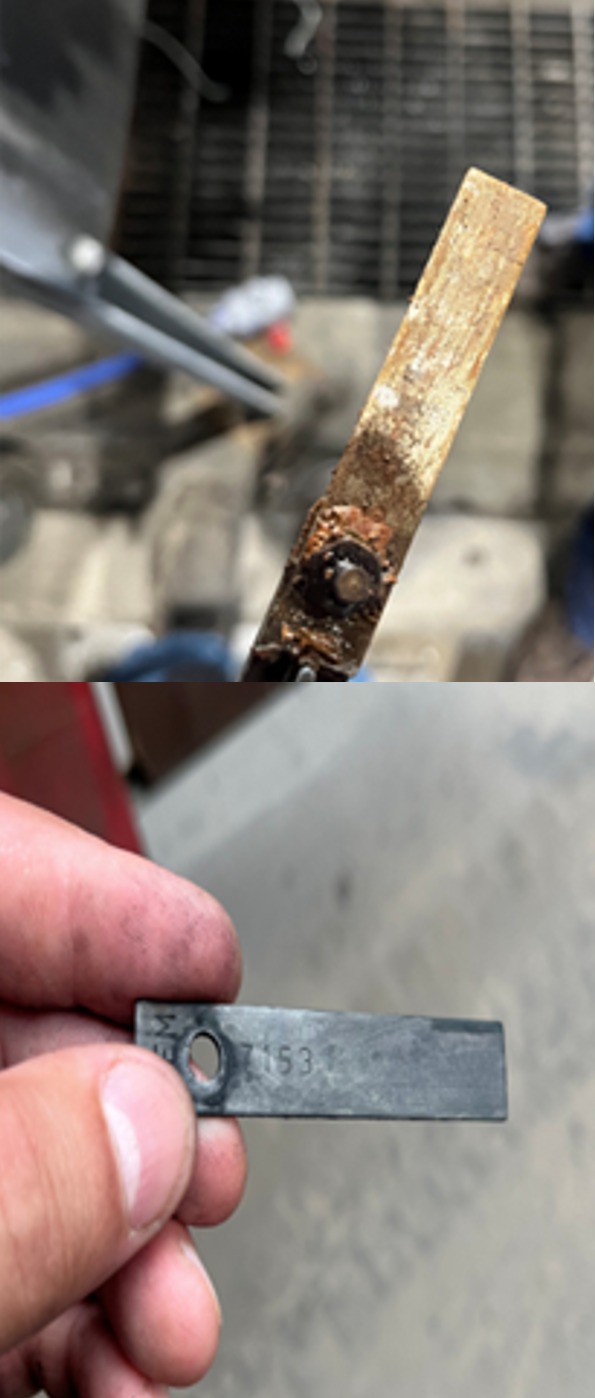
The mill struggled with elevated mild steel corrosion rates of 25-30 mils per year (mpy). Controlling corrosion rates in contact cooling systems can be very challenging due to the level of contaminants and various conditions the system's metallurgy is exposed to in different areas. Veolia offered to do a full review of the corrosion issues around the mill's cooling water system and trial a novel treatment approach.
In contact cooling water, traditional orthophosphate inhibitors are rapidly adsorbed by suspended solids and precipitated by inorganic coagulants commonly used for water clarification. Pyrophosphate can be used as an alternative to orthophosphate because it does not readily precipitate with contaminants, but it eventually degrades into orthophosphate when exposed to chlorine and extended system retention times, causing protective film breakdowns.
Once the phosphate protection barrier fails, sulfate-reducing bacteria (SRB) colonies proliferate, secreting hydrogen sulfide that causes highly acidic, localized pitting.
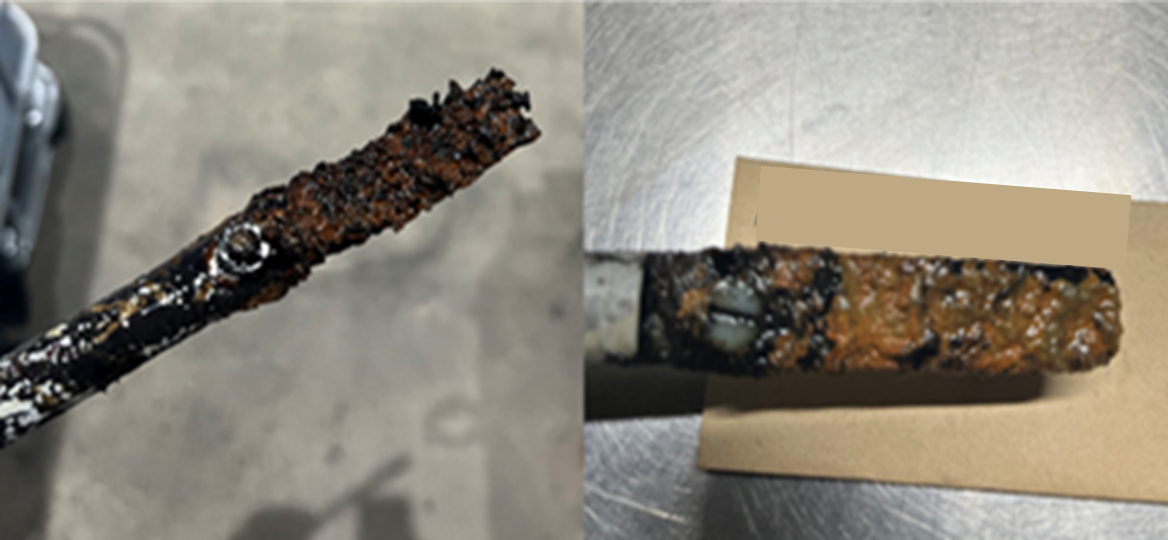
Another issue that plagues contact cooling water is the heavy organic loading from oil and grease, which requires substantial chlorine-bleach addition for microbial control. The bleach, alongside inorganic coagulants, causes chloride levels to skyrocket. Every 100 ppm of bleach can add as much as 8-12% chloride to the water, driving aggressive general pitting and severe wet/dry "exfoliation" in semi-wetted areas like roll stands. Wet/dry corrosion rates can exceed 100 mpy, destroying structural integrity of mills' manufacturing units from within.
Finally, the fluorine from mold powders used in caster spray systems creates hydrofluoric acid when mixed with water, dropping localized pH in the upper spray chamber to as low as 2, further accelerating equipment degradation and generating corrosion byproducts which can deposit in spray nozzles and strainers.
To combat these compounding issues, Veolia's novel E.C.O.Film corrosion inhibitor with Surface Film Forming Catalyst (SFFC) was introduced to work synergistically with a threshold pyrophosphate inhibitor. The new corrosion inhibitor technology is based on an advanced understanding of corrosion protection layers. Utilizing advanced surface microphotography (XPS and ToF-SIMS), the Veolia technology team has determined that effective corrosion inhibition requires discrete layers: a stabilized metal oxide base layer and a thicker organic salt capping layer. E.C.O.Film with SFFC specifically stabilizes the intermediate metal oxide layer. This creates a robust foundation that allows a capping layer-up to twenty times thicker than the oxide layer itself-to form.
Operational adjustments were also implemented to complement the new chemistry. Bleach application was shifted from continuous feed to intermittent shot dosing, combined with a bio-dispersant to strip away biofilms. To address the severe hydrofluoric acid attack in the caster, caustic was added at the scale pit to raise the bulk water pH to 8.5, effectively buffering the upper spray chamber to a less aggressive pH of 4.
Resultado
The application of E.C.O.Film with SFFC technology and operational optimizations delivered transformative outcomes:
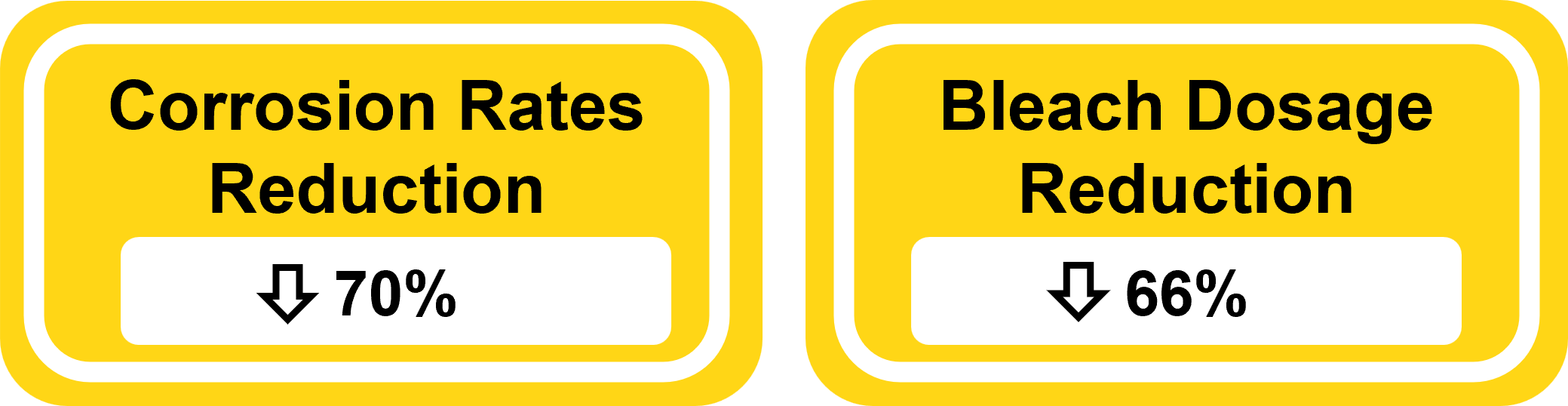
- 70%+ Reduction in General Corrosion: mild steel corrosion rates plummeted from 25-30 mpy down to a much more acceptable range of 3-5 mpy.
- Eradication of Microbiological Pitting: the E.C.O.Film-enhanced metal oxide layer proved so tenacious that SRBs were completely prevented from establishing a "beachhead" on steel surfaces, halting the severe hydrogen sulfide pitting cycle.
- Asset and Heat Transfer Protection: by stopping metal loss, the mill prevented massive accumulations of hydrated iron oxide from fouling spray headers, strainers, and nozzles, thereby protecting heat transfer efficiency and final product quality.
- Cost Efficiency: these significant improvements in asset reliability did not increase overall chemical treatment costs, as the advanced E.C.O.Film program enabled the reduction of bleach dosage by over 66% and also reduced bio-dispersant consumption.
*Marca registrada da Veolia. Pode estar registrada em um ou mais países.