
A landfill approved only for construction and demolition debris in the United States was receiving repeated odor complaints and was a subject of community meetings since its operation started. This situation attracted the local media outlets which began covering the landfill odor issues and the community's reactions. At the same time, the State's Department of Environmental Quality (DEQ) issued a warning letter mandating that the landfill develop and implement an odor management plan or risk closure. The community also threatened to take legal action if the odor issue was not resolved.
The facility had implemented an air scrubber system to address fugitive odors released from their site, but without success. The primary odorous substance detected was hydrogen sulfide (H2S), a gas easily recognized for its rotten egg or sewer smell.
Veolia met with the facility to investigate and identify odor source(s), and to discuss mitigation solutions for hydrogen sulfide (H2S) gas release.
Our Veolia team performed an audit and identified the leachate collection tank to be the primary source of the strong H2S odors. This tank receives and collects all the water percolating through the landfill cells prior to water being hauled out. Leachate samples were collected at different times to capture the variability in contaminant levels, specifically dissolved sulfides. The level of dissolved sulfides in water determines the rate and amount of H2S gas that can be released.
Veolia odor control specialists proposed and implemented a program using ProSweet, a patented H2S organic scavenger treatment. The ProSweet product reacts selectively with dissolved sulfides and H2S in water, thus preventing H2S gas from escaping into the air. ProSweet was added into a large subsurface basin, which accumulates leachate water before it is pumped to the collection tank. This treatment solution does not produce sludge that could compromise the basin's volume design capacity.
Trial success was based upon these two criteria: 1) low dissolved sulfides levels in the leachate tank water and 2) reduction in odor complaints from the community.
Resultado
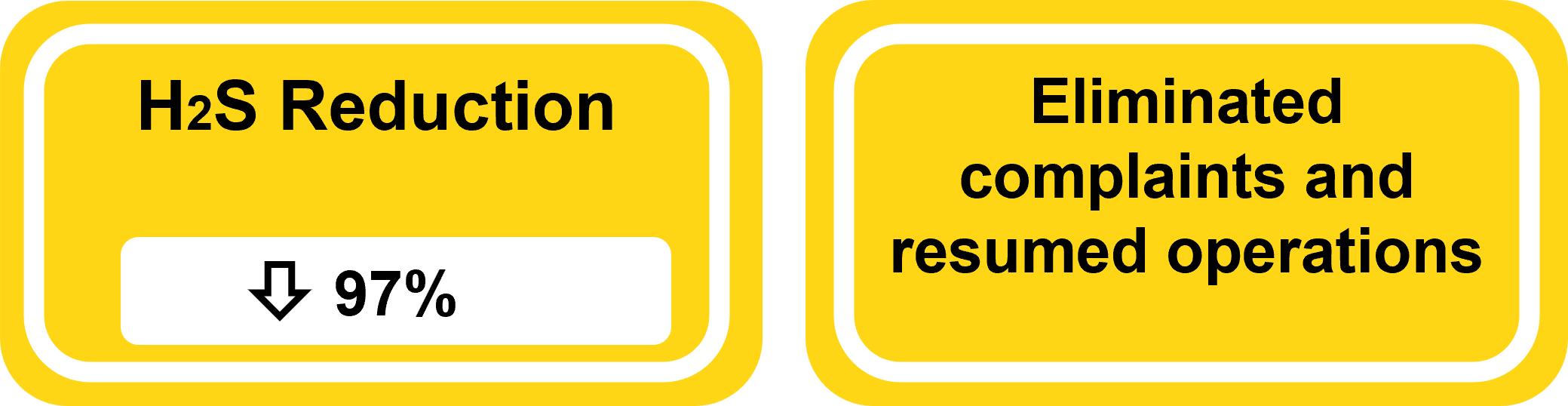
The ProSweet H2S organic scavenger program proved successful during trial and ongoing treatment continues to reduce the level of sulfides in water as shown in Table 1. Subsequently, the amount of hydrogen sulfide (H2S) gas released and odors coming from the landfill was reduced.
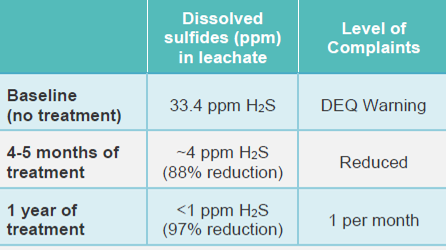
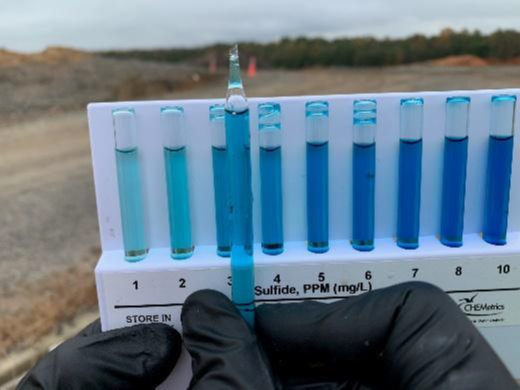
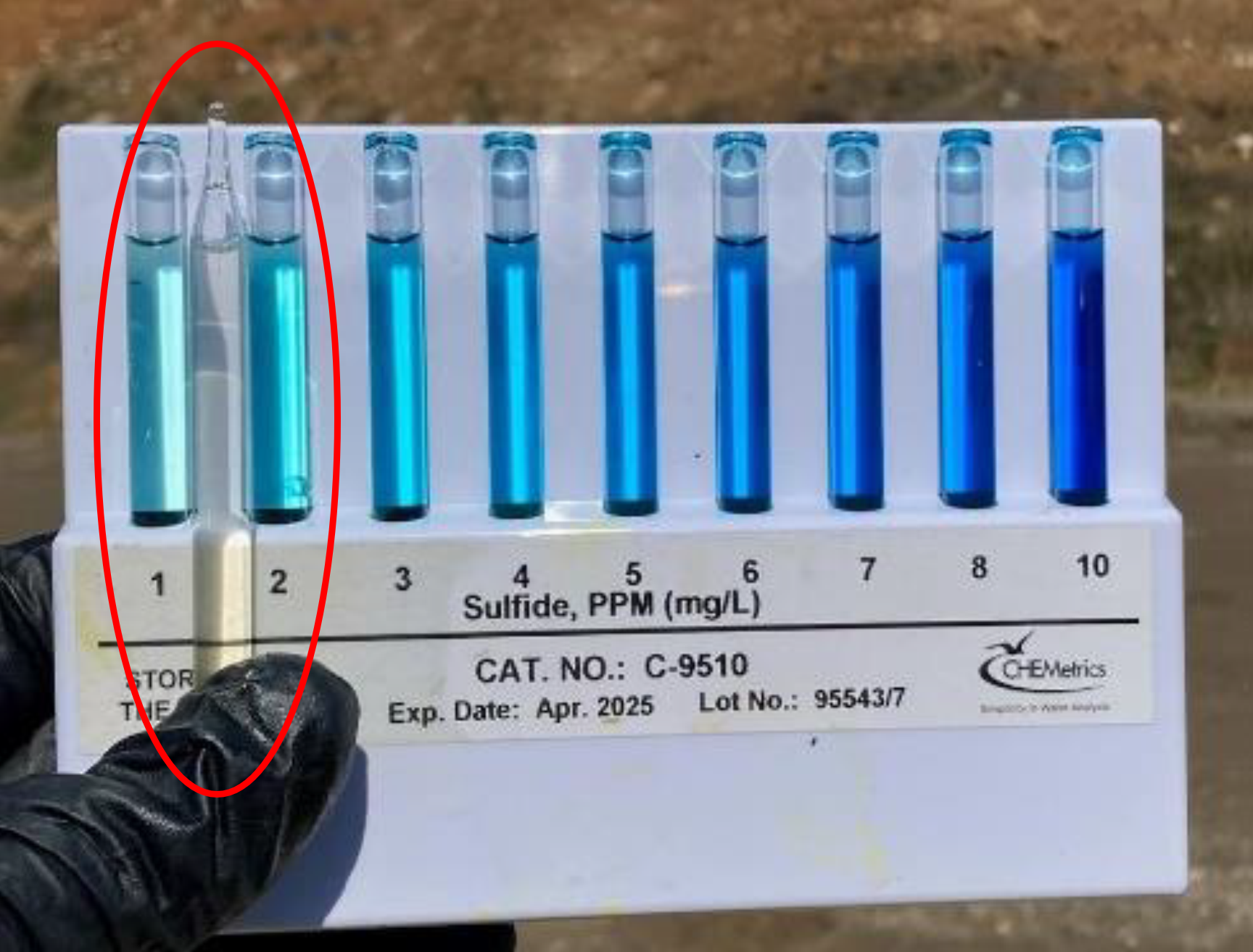
Figures 1 and 2 capture the dissolved sulfide test results 4-5 months and 1 year after implementing the ProSweet program.